EV routing has always been about answering one question accurately: can this vehicle complete this route, and where does it charge? Getting that answer right — accounting for real vehicle consumption, cold weather, elevation, and station reliability, has been the core challenge, and modern EV-native routing engines solve it well.
But most routes still treat the driver as a variable to be optimised around rather than a person with a specific context. The fastest or most energy-efficient path is not always the right path. A driver planning a weekend road trip through the Dolomites does not want the same route logic as a courier completing 80 urban deliveries. A business traveller who needs to charge and eat at the same stop is not the same as one who wants to minimise total trip time at any cost.
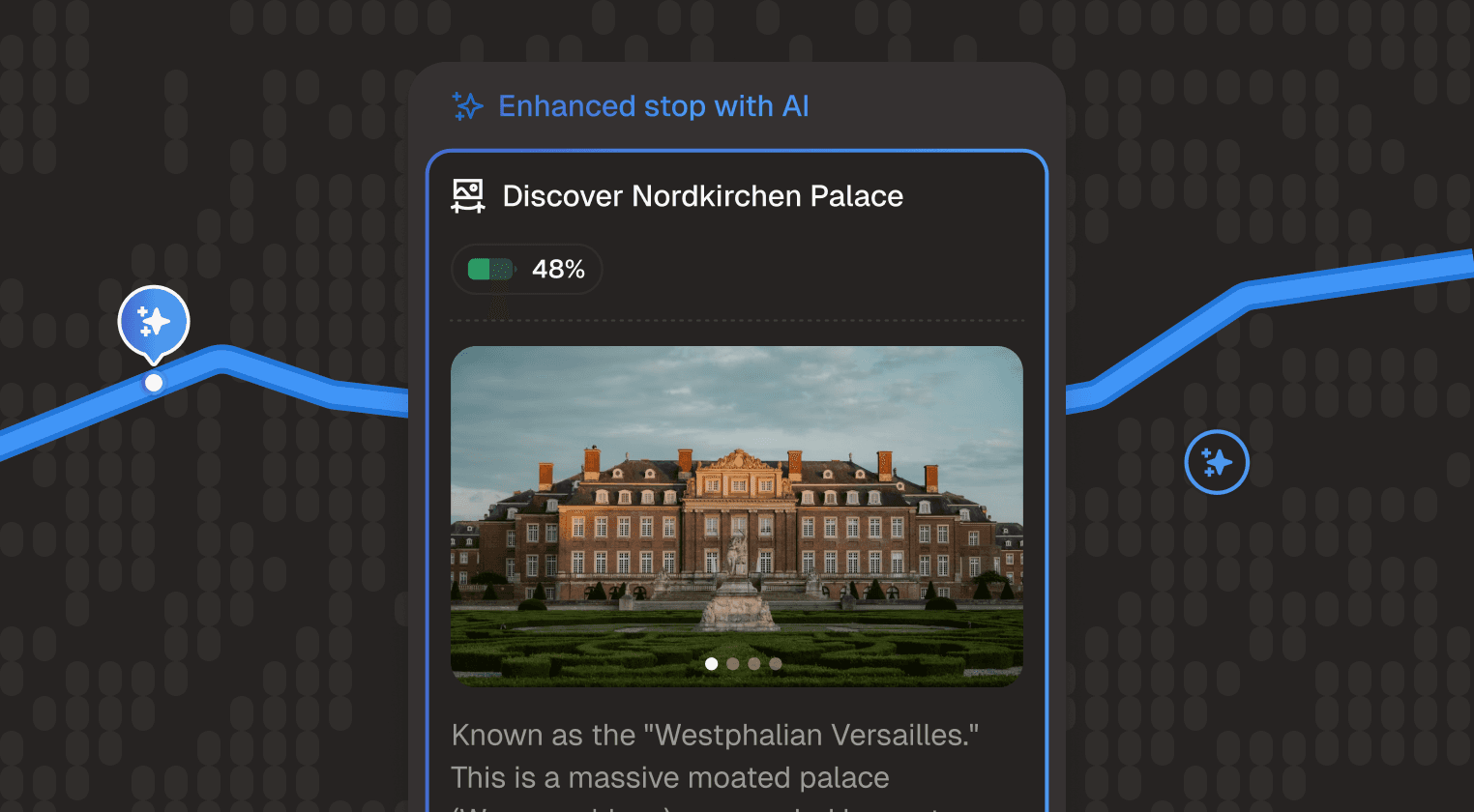
AI enhanced routes change the frame. Instead of only asking what is the most efficient path, they ask what is the right path for this driver, on this trip, with these preferences.