Every winter, the same pattern repeats across EV fleets: range estimates that held up fine in October start missing by a wide margin in January. Drivers arrive at charging stops with less battery than planned, dispatchers scramble to adjust routes, and fleet managers start fielding questions about whether the EVs can actually handle winter operations. They can, but only if the routing accounts for what cold weather actually does to a vehicle.
Battery chemistry slows down in the cold
Lithium-ion batteries lose usable capacity and charging speed as temperatures drop. The chemical reactions that move ions through the battery become sluggish in cold conditions, which reduces how much energy the battery can deliver and how quickly it can accept a charge. This isn't a vehicle defect it's basic battery physics, and it affects every EV to some degree.
Cabin heating draws directly from the battery
Unlike a combustion engine, which has waste heat to spare, an EV has to generate cabin heat using battery energy. Heating a cabin in freezing temperatures can pull a meaningful share of a battery's total capacity, especially on shorter routes where heating represents a larger proportion of total energy use.
Charging itself takes longer
Cold batteries charge more slowly, particularly on DC fast chargers, because the battery management system limits charge rate to protect the cells at low temperatures. A charging stop planned for 30 minutes based on warm-weather charging curves can run considerably longer in winter, throwing off route timing for the rest of the day.
Driving behavior changes efficiency too
Winter driving often means more stop-and-go traffic, reduced tire pressure (which increases rolling resistance), and drivers running heated seats and defrost more aggressively, all of which chip away at efficiency beyond the battery's own temperature effects.
Why this breaks routes planned on static range data
Routing software that uses a single range figure per vehicle model, without adjusting for current temperature that is accurate for maybe half the year. A route that works in July, run unchanged in February, can leave a van short of its next charging stop or a delivery driver unable to complete their round.
Planning around it instead of reacting to it
The fix isn't avoiding winter operations it's routing that treats temperature as a live input, not a footnote. That means:
Range estimates that factor in current and forecast temperature along the route
Charging time estimates that reflect cold-weather charging curves, not warm-weather averages
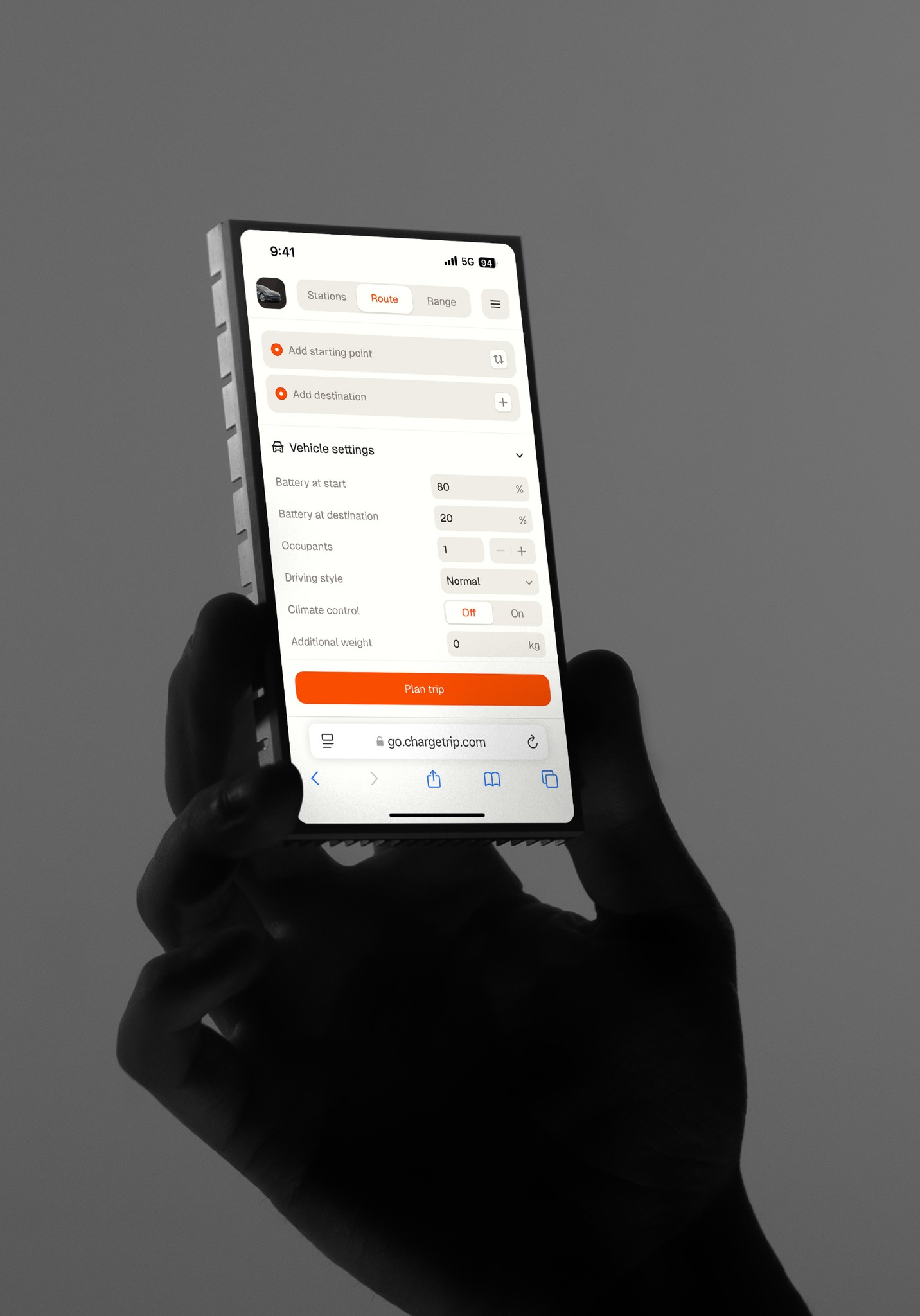
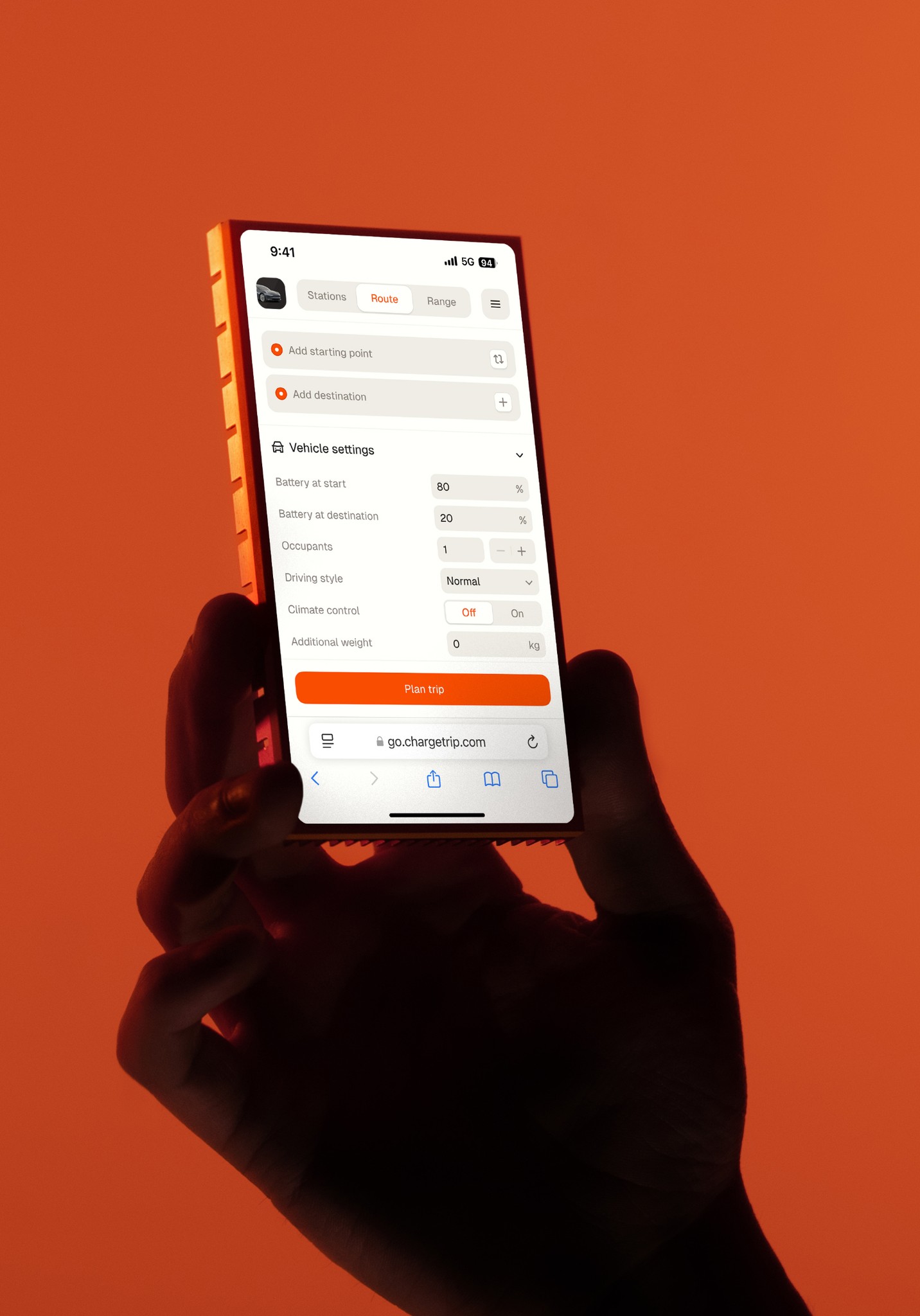
Fleet operators who build this into their routing don't eliminate winter's effect on range — nobody can — but they stop being surprised by it. Chargetrip's routing engine factors real-time weather at time of the calcuation, along with vehicle-specific battery behavior, into range and charging time estimates, so winter routes are planned around reality rather than a warm-weather assumption.